Archive | Cultura RSS feed for this section

Ode to a Fallen Bookstore

1 Aug
The old Borders in my hometown

The old Borders in my hometown

I remember going to Borders in high school late at night when there was nowhere else to go, and stalking the bookshelves with my friends, giggling at romance novel covers and browsing the more esoteric sections of the magazine rack (Cat Fancy, anyone?). Borders was a place to hang out in those teenage years, and even in the last few years, whether it was Borders or Barnes and Noble or any other well-lit place where books are sold (Book Passage is a favorite), I’ve enjoyed perusing the newest titles, flipping through them to check out the dedication page, the back page blurbs, and in the case of translated fiction, who the translator was (once a translator, always a translator).

I also like giving books as gifts to friends and family for birthdays or for Christmas. There was a time when you could show your knowledge of someone’s tastes by buying them a CD by a band that you actually knew that they liked or, better yet, make them a mix that they could play on their own. The death of the mixed tape has been well-documented, a relic from a bygone era of The Bodyguard soundtrack and Kennedy and Bill Bellamy as VJs on MTV. The music store as gathering place for music lovers of mainstream pop acts and obscure bands alike is long gone, but I still miss having a place to go to meet like-minded music fans. Yes, I can meet them online, and iTunes and Pandora have an algorithm that knows exactly what I like, but the music store is something I didn’t realize I’d miss until it was as ancient as the typewriter.

I have the same uneasy feeling now about books and bookstores. That they’re fading fast. I have come to see the convenience of an mp3 player- carrying around with me hundreds of songs (no, I didn’t say thousands- my iPod is from Spring 2005).  So as I walk the streets of San Francisco, I can listen to a song I bought when I was 15, and then listen to a song that’s playing on the radio today. The iPod provides an ever-changing soundtrack to my life, curated by me. And yet I still don’t understand the appeal of the e-reader.  When will I ever need to carry around thousands of volumes of books at once? So I can toggle between War and Peace and In Search of Lost Time? I like to finish one book before starting another.  And what of giving a book as a gift- inscribed by the giver with a personalized message, a sort of “I know you’ll enjoy this, dear friend”? It’s not possible with an e-reader.

Closed Borders Soma

Closed Borders Soma

I’m sure these arguments will seem quaint in the future, a future where libraries are gone and bookstores are empty and abandoned, just like the one in my hometown Borders seen above (and also the one in my San Francisco neighborhood that closed last October). But there is something convivial about a bookstore filled with browsers that can’t be found in these empty storefronts- or in the glowing screen of an e-reader.

Matisse, Picasso, and Women

29 May
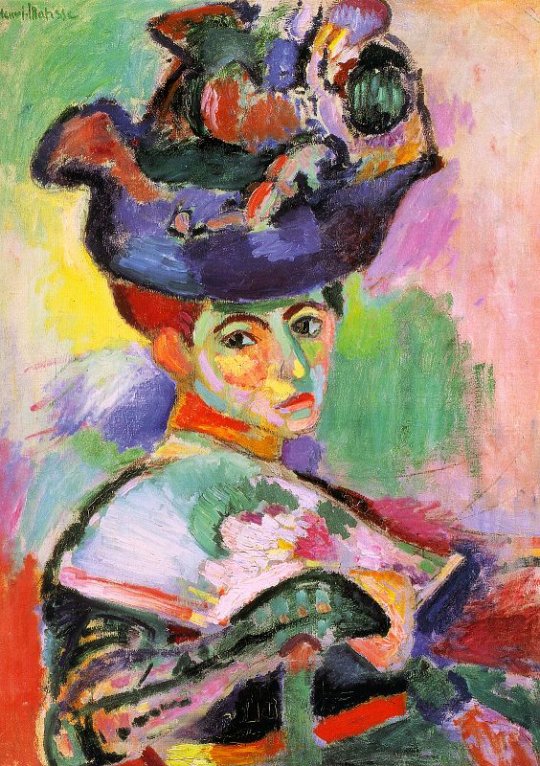
Matisse Woman With A Hat

Matisse Woman With A Hat

Yesterday, I had the pleasure of seeing “The Steins Collect: Matisse, Picasso and the Parisian Avant-Garde”. The thrill of seeing a blockbuster exhibit like this is entering a room and catching sight of a painting you have long admired, and always seen reproduced, and seeing it up close- each brushstroke remarkably vivid. I wanted to see this exhibit because I like Matisse- his colors, his strokes, and his portrayal of women. Compare the latter to Picasso’s nearly literal objectification of women in his work, and you see an important difference between the two artists.

Consider the beautiful work above. “Woman with a Hat” was controversial in its time for its use of color. Yet Matisse infuses the woman with not just color but emotion- her face is a canvas that conveys longing, wistfulness, perhaps regret, and sadness. The bright color contrasts the sadness in her eyes.  Matisse has drawn a fully human portrait here.

Now look at the painting below. Picasso’s “Head in Three Quarter View” shows an up close view of a tribal mask gazing downward. Or is it the face of a woman? The face has the color and texture of a bronze mask; as a matter of fact, it looks detached, as if there is nothing in the back. Picasso’s women were wild objects of desire, objects of fascination that served as muse (I also saw a report on the exhibit “L’Amour Fou” at the Met this morning on CBS Sunday Morning, about Picasso’s muse and lover Marie-Therese Walter.) The women are flat and one-dimensional- a receptacle for the artist’s talent.

In any case, if you are in San Francisco at any point before September 6th, you should see this extraordinary exhibit.

Head in Three Quarter View

Head in Three Quarter View

Bringing up Baby With No Gender

28 May
Little Girls

Little Girls

Surely by now you’ve heard of the Canadian couple, David Stocker and Kathy Witterick, who have decided to raise their 4 month old baby Storm as “gender neutral” (never mind that the poor baby has the name of an American Gladiator).  The fact that this news has generated such outrage speaks to the woman and man in all of us. There are indeed many aspects of gender identity that are imposed by society, but I believe that men and women are inherently different.  Anyone who has observed toddlers can see it- baby girls and baby boys develop differently.  Boys are rambunctious and physical, and girls tend to develop language and social skills earlier than boys.

Without giving Baby Storm a gender, he or she will be rudderless.  A good approach for the open-minded parent is, I believe, to allow a son to play with dolls if he chooses or a girls play with toy trucks if she chooses, but at the end of the day, parents mold their children.  There are so many other disturbing aspects of this story. Like the fact that the 5 year old child in the family is being “unschooled”.  Which is a nice way of saying he is being uneducated. The parents claim to teach him only when he asks to learn something, which is pretty ludicrous. If all kids were taught this way, no one would learn anything.  These well-meaning parents are providing their kids with no path or guidance in life, to an extreme.

And I think that in trying to de-emphasize the importance of gender in forming an identity, they are making it a much bigger deal.  Will Storm feel shame when he or she goes to use a public bathroom? Will she or he feel overwhelmed when it comes time to relate to his or her peers? Without having been given the most basic aspect of identity by his or her parents, who have relegated Storm to a toddlerhood of being an it, Storm faces much confusion in her or her earlier years.  I wish this young kid the best of luck in figuring out who he or she is.

Boys

Boys

Black in Latin America

21 May
Henry Louis Gates Jr.

Henry Louis Gates Jr.

If you ever had any interest in seeing Henry Louis Gates Jr. gaze admiringly at statues of Latin American leaders, then the Black in Latin America series is for you (just see the image above for a representative example).

I admire the venerable professor, and have a longstanding interest in Latin American history, so I watched the series with interest, in order to broaden my knowledge of the black experience in Latin America.  The first episode was promising.  Haiti and the Dominican Republic, which share an island but have had a contentious history, were profiled.  I found it interesting to see why Haiti identified more strongly with its African heritage, but it did seem that the comparison between racial identity in the two countries was a little too pat.  Haitians=African and Dominicans=Spanish.  I think a more nuanced picture of Dominican racial identity could have been portrayed.

The more complicated racial histories of Cuba and Brazil are highlighted next in the series, and I was pleased that Cuba was shown neither as a racial paradise nor as a racial hellhole for its dark-skinned citizens.  The story is complicated, and I was glad that Gates talked with both veterans of the Cuban revolution and young Cubans who have known nothing but the current regime.  Brazil was also a fascinating study.  We always hear that Brazil is a diverse, rainbow society, but I was surprised to learn that the influx of European immigrants in the mid 20th century was the direct result of a government program to whiten the country.  It has only been fairly recently that the country has begun to embrace its diverse heritage.

Black in Latin America

Black in Latin America

The episode that left me the most puzzled was the last one, on Mexico and Peru. On the one hand, I thought it was the most necessary, because I’ll admit, though I am knowledgeable about Mexican history, I had no idea the extent of the African slave trade in Mexico, nor the African heritage of some of Mexico’s national heroes, such as Morelos and Guerrero.  The Mexican national narrative of “la raza cósmica”, the mixing of the Spanish and the indigenous, is thrown for a loop.  Looking at the faces of Mexicans featured in the show- everyday Mexicans, young and old, male and female- the discerning eye begins to see African features.

And yet it is in this episode that it is most glaringly obvious that Gates brings to the whole venture his own perspective as an African-American.  He looks at Mexican racial history through an American lens, and I admit that I winced when he called the residents of a mostly black town in Mexico “brother”.  The racial history of the U.S. is so different from that of Mexico that you can’t travel to one country with the perspective of another.

What Does an American Look Like?

18 May
American

American

No joke- when I am looking for an image for my blog posts, I just type the topic into google images and see what comes up. “End of the world”. “Latinas”. It’s interesting to see what images come up.  So the image at left is what you see when you type in American. It’s the first image, anyway.  Thanks, Google, for proving my point.

Which is that when non-Americans think of what an American looks like…they think of something resembling that image.  I was thinking about this today because last night I talked at length with a friend who had just spent 5 weeks in India.  She told me about the natural camaraderie among Westerners, whether expats or travelers, and the way that Indians of all ages would constantly ask to take pictures with her.  And somehow I thought to myself, if you’re an Asian-American, say, or a Black Brit, or a Brazilian, and you’re traveling through India, are you welcomed into the coterie of well-travelled Westerners? And are Indians clamoring to have their pictures taken with dark-skinned Westerners?

I recall several Olympics ago when MSNBC infamously included a headline on its website, “American Beats Out Kwan”. Figure skating champ Michelle Kwan’s nationality was put in question, even though she’s from Torrance (you L.A. natives out there know Torrance). Would we expect to see a headline like “American Beats Out Roddick at Wimbledon”? or “American Loses to Woods at Masters Tournament”?  Hardly.  The old Michelle Kwan headline is, well, old, but among foreigners I can tell you anecdotally that Americans are expected to be blond-haired, blue-eyed, and white.  Anyone who veers from the norm just makes people’s heads explode. Granted, I haven’t travelled abroad since Obama’s election.  Perhaps things have changed.  And perhaps a black or brown Westerner traveling in the Indian subcontinent will be asked to be in the photo albums of the locals. Maybe when we think American, we can think of this:

Typical American

Typical American

To a Modern Mom on Mother’s Day

8 May
Mother and Child

Mother and Child

I just had a lovely Mother’s Day with the family- it was very low-key, just hanging out at the house and eating hamburgers expertly made by my brother. Over the years, as I get older, I appreciate my Mom more and more, and the way she was able to blaze her own trail in a time when having a career  before marrying and having children was common.

She came to the U.S. with her family from Mexico at age 9, knowing no English. In high school she quickly became known as a class clown, impressing the girls with her spot-on Elvis impression. After graduating from high school, she began working as a bank teller.  That would mark the beginning of a career in banking that would span 26 years and see her leave the profession as an executive, wife and mother of two small children.

Before meeting and marrying my Dad at the bank where they both worked, she managed to travel to Mexico, Spain, Chile, Argentina, Uruguay and Brazil with friends, living life to the fullest before settling down in her late 30s. There is much more to her, of course, like her kind, giving nature and sense of humor, but the very facts of her life are pretty remarkable.  For my friends who wonder if their window to have children is gently slamming shut, I remind them that my Mother had me at age 39 and my brother at age 42.  It is entirely possible to have it all.  Happy Mother’s Day, Mom.

Olmecs at the DeYoung Museum

6 May

Smiling Olmecs

What a great night to see historic ruins, Spanish fashion and dance cumbia till your feet hurt. I just saw the Colossal Olmecs exhibit at the DeYoung exhibit, which, to mark its closing weekend, had a  celebration featuring live music and dancing, followed by a DJ playing cumbia.

How nice it was to see a diverse group of people- old white hippies in puffy pants, young Latino families with small kids, 20 somethings of all hues, regular museum-goers and first-time attendees, all taking in the majesty of these colossal, intricate statues and carvings which were reflected in the faces of many in attendance. And yes, afterwards all of these people danced and celebrated together.   It was a great display of joy and unity.

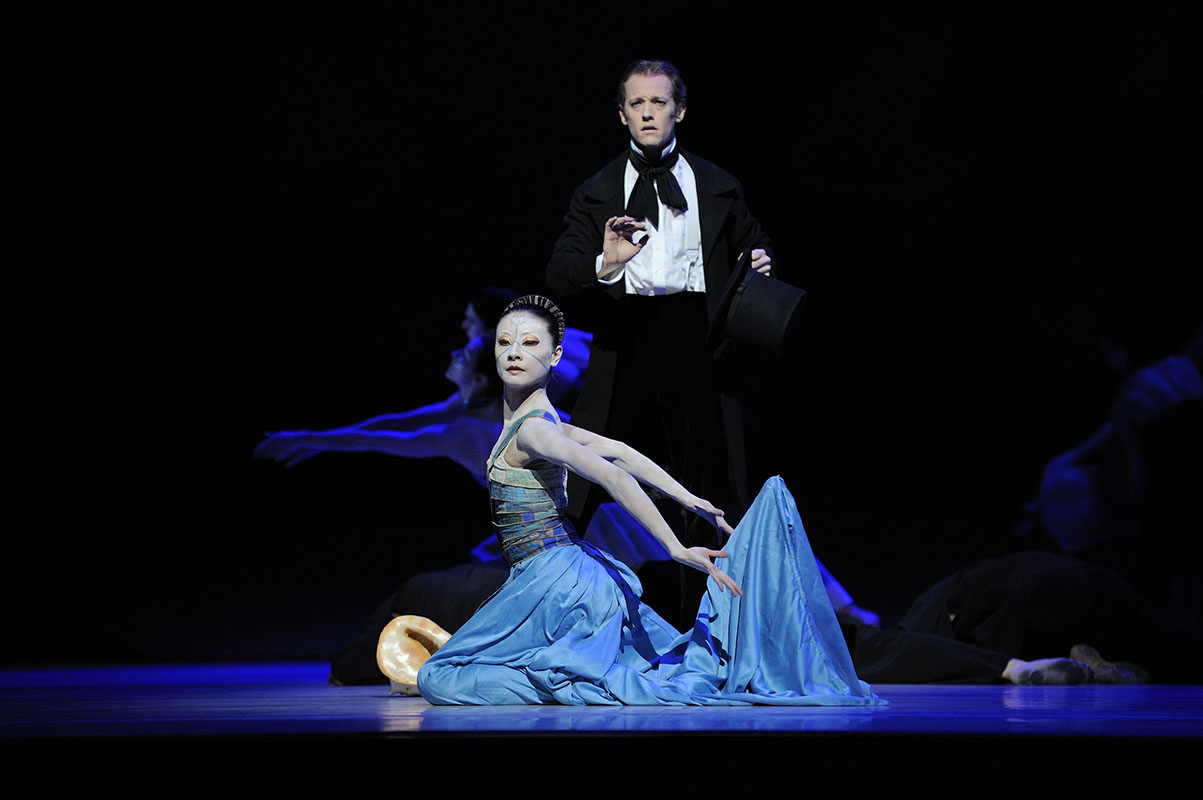
San Francisco Ballet’s The Little Mermaid

4 May
Little Mermaid

Little Mermaid

I am posting this a few minutes past midnight, so technically this means I didn’t post anything on the 3rd of May. But technically I haven’t gone to sleep yet, so for me it is still the third.

I just saw The Little Mermaid by the San Francisco Ballet at the War Memorial Opera House.  It was long- hey, I am just now getting to bed, and it’s a Tuesday- and the material was dark.  But the dancing was pure artistry, and the lead dancer in particular, Yuan Yuan Tan in the title role, gave a bravura performance. The ballet really makes one think about unrequited love, heartbreak, sacrifice, naivete, and disappointment. I am actually not a huge ballet fan- I went mostly to go out with some girlfriends on a “school night”- but this one was particularly moving.

The Transformative Power of Travel

2 May
Venice Italy

Venice Italy

I just got back from picking up my parents from the airport.  They just returned from two weeks in Italy.  This was my Mother’s first trip to Italy, and my father’s first trip abroad, ever. They kept in touch throughout the trip with the new possession that my formerly technophobic Father now loves more than life itself- the iPad.  And it has been through emails sent through the iPad that I was able to catch a glimpse of the eye-opening experience my parents were having.

What’s more, not only was I happy that, in their empty nest years, they’re seeing and doing and learning new things, but the experience of eagerly waiting for word from them, hearing them confirm their safe arrival, double checking their flight time and opening the mail to find a postcard from a new city- well, it made me realize what it may have been like to be in their shoes all those years. As parents age, children switch roles and begin to adopt a more maternal role for the ones who always cared for them. I’ve been noticing it more and more over the years.  I urge them to eat better and exercise more.  Now that I’m able to, I’d like to take care of them more.  Just as a parent is happy whenever their child is happy, so too did I feel a vicarious thrill at news of their happy travels. My travels have opened my eyes over the years, and now I am glad that my parents get to experience this same thrill of discovering new lands and peoples. It all comes full circle.

A Very Bloggy May

1 May

I started this blog last fall with the intention of writing at least once a week about Web 2.0 and the way it was changing our lives; marketing from the perspective of a budding marketing professional; and my take on issues and news affecting the U.S. Latino community. Those issues have provided me with fodder for very interesting posts, but in the last few weeks the posts have been fewer and fewer. I still have the intention of writing once a week, but I wait for lightning to strike, and then writer’s block sets in. And worst of all, this makes blogging feel like a chore. Which I certainly don’t want it to become.

I like writing, and there are so many topics that interest me.  So I have come upon an interesting solution to revive the blog and get myself into the habit of regularly writing for this blog again.  A May resolution, if you will- one new blog post, every day during the month of May, on any topic of my choosing.  So yes, this will mean broadening the content to whatever may interest me on a given day- politics, both local and national, the economy, health, family, heck, even fashion (I’ve been known to put together a nice outfit from time to time).  I know that every social media expert says that the key to having a successful blog is to hone in one or two areas and sticking to them.  However, this month-long experiment in daily blogging, 30 posts in 30 days, is more about producing regular content- something else the social media experts will tell you is important to building a readership.

So join me on this month of daily writing on what will surely be a wide variety of topics.  Happy May Day!