I Just Plain Love This Ad

4 May
Heineken The Entrance

Heineken The Entrance

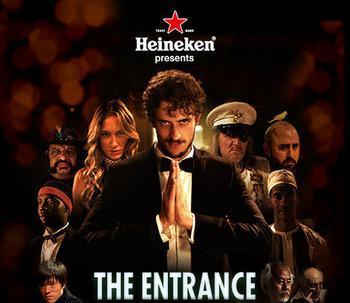
Call me old-fashioned, but although I have a DVR, I do still watch live TV.  And I watch the commercials.  Granted, I watch many of them on mute, but occasionally one breaks through the pack of blah blah ads and brings joy to my cynical ad-watching. It also doesn’t hurt that the ad in question is for a beer that I already dig.

So I am talking about the newest commercial for Heineken, “The Entrance”.  Guy goes to a bar, fun and awesomeness ensue- and a Duffy-esque singer sings.  I like beer ads that show people having a great time without resorting to testosterone-fueled debauchery (the peaceful Corona ads on the beach are also great for this reason, though sadly, I hear they’re on their way out).  I like ads that make you feel happy. The party in this commercial is one I want to go to. I raise my glass to the folks at Heineken for approving this enjoyable ad.  Sing it out loud! (Seriously, does anyone know who the singer is or what she is singing?)

San Francisco Ballet’s The Little Mermaid

4 May
Little Mermaid

Little Mermaid

I am posting this a few minutes past midnight, so technically this means I didn’t post anything on the 3rd of May. But technically I haven’t gone to sleep yet, so for me it is still the third.

I just saw The Little Mermaid by the San Francisco Ballet at the War Memorial Opera House.  It was long- hey, I am just now getting to bed, and it’s a Tuesday- and the material was dark.  But the dancing was pure artistry, and the lead dancer in particular, Yuan Yuan Tan in the title role, gave a bravura performance. The ballet really makes one think about unrequited love, heartbreak, sacrifice, naivete, and disappointment. I am actually not a huge ballet fan- I went mostly to go out with some girlfriends on a “school night”- but this one was particularly moving.

The Transformative Power of Travel

2 May
Venice Italy

Venice Italy

I just got back from picking up my parents from the airport.  They just returned from two weeks in Italy.  This was my Mother’s first trip to Italy, and my father’s first trip abroad, ever. They kept in touch throughout the trip with the new possession that my formerly technophobic Father now loves more than life itself- the iPad.  And it has been through emails sent through the iPad that I was able to catch a glimpse of the eye-opening experience my parents were having.

What’s more, not only was I happy that, in their empty nest years, they’re seeing and doing and learning new things, but the experience of eagerly waiting for word from them, hearing them confirm their safe arrival, double checking their flight time and opening the mail to find a postcard from a new city- well, it made me realize what it may have been like to be in their shoes all those years. As parents age, children switch roles and begin to adopt a more maternal role for the ones who always cared for them. I’ve been noticing it more and more over the years.  I urge them to eat better and exercise more.  Now that I’m able to, I’d like to take care of them more.  Just as a parent is happy whenever their child is happy, so too did I feel a vicarious thrill at news of their happy travels. My travels have opened my eyes over the years, and now I am glad that my parents get to experience this same thrill of discovering new lands and peoples. It all comes full circle.

A Very Bloggy May

1 May

I started this blog last fall with the intention of writing at least once a week about Web 2.0 and the way it was changing our lives; marketing from the perspective of a budding marketing professional; and my take on issues and news affecting the U.S. Latino community. Those issues have provided me with fodder for very interesting posts, but in the last few weeks the posts have been fewer and fewer. I still have the intention of writing once a week, but I wait for lightning to strike, and then writer’s block sets in. And worst of all, this makes blogging feel like a chore. Which I certainly don’t want it to become.

I like writing, and there are so many topics that interest me.  So I have come upon an interesting solution to revive the blog and get myself into the habit of regularly writing for this blog again.  A May resolution, if you will- one new blog post, every day during the month of May, on any topic of my choosing.  So yes, this will mean broadening the content to whatever may interest me on a given day- politics, both local and national, the economy, health, family, heck, even fashion (I’ve been known to put together a nice outfit from time to time).  I know that every social media expert says that the key to having a successful blog is to hone in one or two areas and sticking to them.  However, this month-long experiment in daily blogging, 30 posts in 30 days, is more about producing regular content- something else the social media experts will tell you is important to building a readership.

So join me on this month of daily writing on what will surely be a wide variety of topics.  Happy May Day!

What Does a Latina Look Like?

9 Apr
Multi-ethnic Models

Multi-ethnic Models

I belong to a group on Facebook where Hispanic online marketing professionals can gather to share news on the industry and debate issues.  One member posted a link to an article in MediaPost about Estee Lauder’s new Idealist skin care line, which is supposed to work wonders with all skin types.  The models pictured at left are the ones whose faces will grace the campaign, and there was a bit of a comment kerfuffle on the Facebook group as to whether Latinas were being excluded from this campaign.  We see no Latinas in the photo. Or do we?

Several commenters rushed to point out that there is no Latina look, and that Latinas can indeed look like anything. Some mentioned that they and their daughters do not look typically Latina, yet they identify closely with the culture. Well, count me and my Mom in that category. My looks are far from typically Latina- my skin tone is something akin to eggshell white- and this is compounded by the fact that my first name is a little less Guadalupe María, a little more Jane. People do not assume that I am Hispanic.  And yet, I am.

Back to the image of the models.  It turns out that the model on the left, Joan Smalls, is Puerto Rican. You can be Latina and black, por supuesto. The model in the center, Constance Jablonski, reminds me of Alexis Bledel, of “Gilmore Girls” and “The Sisterhood of the Traveling Pants” fame, who herself is Mexican and Argentinean. And the model on the right, Liu Wen, bears a resemblance to Peruvian presidential candidate Keiko Fujimori.  So all of them could conceivably be Latina.

Many people, we Hispanics included, have an idea in mind of what Latinas look like.  Brown-skinned. Mestizo, looking both a little Spanish and a little Indian. Brown eyes, brown hair. If asked, I would say Mexican actress Kate del Castillo fits the mold quite well. But Hispanic is not a race- it is a loosely defined idea, a grouping for those people living in Spanish-speaking lands.  It covers everything from Dominican Republic to Argentina, and all the lands in between.  Naturally, there will be some variety.  In this country, we like knowing who’s who and what’s what.  Admit it- how many times do you rush to Wikipedia or Google while watching a TV commercial and search for something like, “guy from the Sprint commercial, what is he? Asian?” Faces of ambiguous origin make us uneasy- we need to have an explanation, fast.

Latinas are underrepresented in Hollywood and the mainstream media, which I think explains the consternation of the member of the Facebook group that a typically Latina face was not included in the Estee Lauder campaign.  Yet I think if we broaden our idea of what a Latina can look like, we’ll see that our community is more diverse than we realize. Let’s use a big-tent approach to Latinidad.

DQ Burgers: Trying to Be Viral, and Failing

24 Mar
Viral Video

Viral Video

There is much discussion among marketers about what makes videos go viral. No one quite knows how to put lightning in a bottle, but once you see it, you know it. My favorite viral video? Old Spice Guy. Need I say more? He’s handsome, he’s suave- he’s the cologne-wearing man your man wants to be and your woman wants to be with. He’s a bit outrageous, a bit over the top, yet he knows it.

So what do you get when people try to turn the charm of Old Spice Guy and push it through the ad agency assembly line? You get the cringe-inducing new campaign for Dairy Queen Burgers.  A brief synopsis: tall handsome in a dorky way guy attempts to charm the audience while describing the rather stale brand, then ending on a ridiculous line. Except rather than “I’m on a horse”, it’s “The guitar sounds like dolphins”. The ad is not very creative, and it’s so derivative of Old Spice Guy it hurts. Hence the inducing of cringes.

News flash: viral hits like Old Spice Guy only happen once. There is no formula, like add one part handsome guy and add two parts pithy dialogue to make the young kids swarm to your product.  The old currency in advertising was: take what has worked for someone else, take it apart, and remake it for your brand. The new currency is that you do your own thing and know your audience. So that’s teenage boys and Axe Body Spray; that’s young women and Yaz birth control; it’s middle management and Charles Schwab. So chart your own path, Dairy Queen. Minus the guitar that plays dolphins.


What a Translator Wants

8 Mar

Once upon a time, dear reader, I trained to become a translator.  I studied it intensively for two years, with a translation internship in Mexico sandwiched between both years of study.  Though I continue to accept less than 10 translations a year now that I am a full-time marketing professional, I still am a member of the American Translators Association and the Northern California Translators Association, both of which do good work advocating for translators and promoting professional opportunities.  Translators are used to ranting and raving among themselves about different trends they see in the industry, but for the marketing folks, let me let you in on a few tidbits that the translators would like you to know.

– Translators and interpreters do different jobs. Below, at left, you’ll find an interpreter at work:

Interpreter

Interpreter

And below is a translator at work.

Freelancing

Freelancing

See the difference? Visual aids make things so easy. Translators render written text from one language to another, usually with a computer, often from home, and more often than not, in one’s pajamas. Interpreters, on the other hand, work with spoken language. Person A says, “Me duele la panza”, and the interpreter then says to Person B, “My stomach hurts”. And then Person B, usually a doctor, diagnoses Person A, usually a patient.

Translators use dictionaries, glossaries, translation memory tools, and often work with an editor while completing a large translation. They must have strong writing skills in their native language (translators always translate into their native language). Interpreters must know both technical knowledge (i.e. legal terminology) and slang, and be able to interpret it fast. Strong memory skills are a plus.

Lastly, I’d like to discuss a term that seems to have entered the marketing lexicon recently.  It makes my blood boil, so let’s just deal with it now: transcreation.  Somewhere along the line, someone came up with the idea that translation refers only to the literal translation of one word to another, whereas text that requires some adapting or reworking is not translation- it’s transcreation.  Translation refers to ALL types of translation, even when puns, jokes, double entendres, slang, legalese and other types of language that are tricky to translate are involved.  Transcreation is a fancy new name for something translators have always done and continue to do- use their knowledge of the source language to produce a readable translation in the target language, communicating the same idea. Punto.

Las Nuevas Reglas de la SEO

1 Mar
Content Farms

Content Farms

Cuando habla Google, la gente escucha. Y hace poco, el gigante de los buscadores ha dado a conocer unos cambios de su famoso algoritmo. Hay dos cambios significativos que se implementarán próximamente: aumentar la importancia de la “búsqueda social”, y penalizar los sitios que recopilan contenido de otras fuentes (en inglés, content farms).

Los internautas están compartiendo enlaces a través de las redes sociales cada vez más; es probable que la primera vez que viste un video popular o leíste algo sobre una noticia importante, fue a través de Facebook o Twitter.  Por esta razón, Google ha decidido dar más importancia a los enlaces compartidos en las redes sociales. Esto está vinculado a la búsqueda personalizado; es decir, si el buscador conoce tus gustos y lo que sueles buscar, también conoce quién en tu red personal comparte noticias que lees.

¿Qué significa la nueva importancia de la búsqueda social para los que trabajan en el marketing?  Es otro indicio de que el aspecto social del internet no es un modo pasajero.  Google está intentando mejorar sus resultados para que sean cada vez más relevantes. Por lo tanto, lo que compartes en Twitter, Flickr u otra red- aunque, por el momento, no Facebook- puede llegar a más gente, y vice versa. La idea es que si todo el mundo está hablando del tema en Twitter, debe de ser relevante.

La otro nueva noticia es que Google ha modificado su algoritmo para que sitios con contenido original valgan más que los sitios que sólo recopilan contenido y enlaces de otras partes.  Quizás hayas buscado cómo hacer alguna cosa- por ejemplo, “cómo hacer ejercicios para los brazos”.  Y los primeros resultados son sitios con más anuncios que contenido.  Tienen mucho texto pero pocas imágenes. Un ejemplo de uno de estos “content farms”- literalmente, granja de contenido, donde se cosecha contenido poco relevante- es eHow.com. Algunos han quejado en el pasado de que Google no haya podido distinguir entre los buenos sitios y los malos sitios. Eso acaba de cambiar.

Ahora los sitios que tienen poco contenido original son penalizados en los buscadores.  Alexis Madrigal, de The Atlantic, comparó el nuevo algoritmo con el viejo, utilizando un servidor de la India y uno de Estados Unidos (el cambio solo se está realizando en EE.UU.), y vio que los resultados para Estados Unidos eran mucho mas relevantes.  Entonces, esto nos recuerda lo que muchos ya han dicho: reina el contenido. Mejor dicho, reina el BUEN contenido. Si el sitio está diseñado únicamente para aprovechar los buscadores y no para ayudar a los seres humanos, será penalizado. Esto representa buenas noticias para los que usamos Google en nuestra vida diaria; me he quejado antes de los sitios que no proveen nada útil.  Google está buscando más que los términos de búsqueda; ya está buscando calidad.  Me interesa ver cómo van mejorando el buscador para estos fines.

Diversity (or Lack Thereof) at the Movies

20 Feb
La Bamba

La Bamba

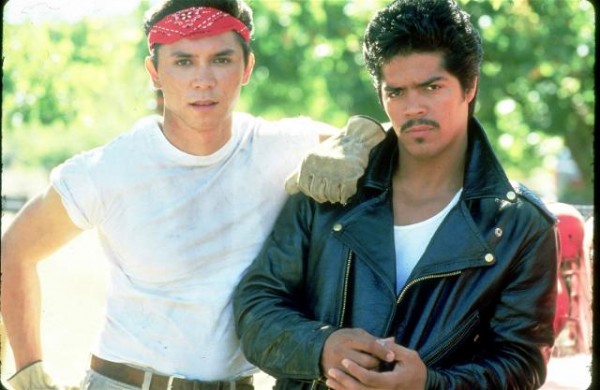
I like to say that what the Super Bowl is to men (especially the men in my family), the Academy Awards are to me. A Sunday afternoon spent eating popcorn, glued to the TV, while enjoying a once a year spectacle at times predictable and at times thrillingly unpredictable (Bjork’s original black swan, anyone?). Yet I can’t help but notice that this year’s Academy Award nominated films are a little on the homogenous side. I’m not the only one who’s noticed.

Just a few days ago, New York Times movie critics Manohla Dargis and A.O. Scott (the latter is one of my favorite critics, along with the New Yorker’s Anthony Lane and the always great Roger Ebert) discussed the dearth of faces of color in the movies of 2010, on the occasion of the Oscars. I would agree with their premise that the stories being told and celebrated by Hollywood reflect an unbearable whiteness of being, but while the writers focus on the history of African Americans in Hollywood, I would say that the issue of diversity onscreen is not only a black and white issue. We are not seeing stories by and about people of color, period.

When it comes to the portrayal of Latinos onscreen, there is reason to believe that we will see more- but will these movies be any good? Pantelion films is a new film studio dedicated to making movies specifically for the U.S. Latino market. And yet its first feature, “From Prada to Nada”, has received both poor reviews and low box office.  This movie (which I haven’t seen) is proof that even with Latinos behind the camera, stereotypes can abound. One need look no further than the films of Tyler Perry to see that, as much as critics (including Spike Lee) may decry the depiction of African-Americans in his movies (see: men in drag), audiences love his middlebrow fare.  So does it matter if filmmakers of color are at the helm if they are just rehashing the same old Latino boxer/African-American thug stereotypes? Does quantity (number of roles for minority actors) matter more than quality? And what’s quality?

Anthony Mackie in The Hurt Locker

Anthony Mackie in The Hurt Locker

In recent years, there have been Oscar-nominated movies featuring diverse casts- “Babel”, “Children of Men”, “Pan’s Labyrinth” (and those are just the Mexican directors); most recently, last year Mo’nique won Best Supporting Actress for her role in “Precious”, and only two years ago, the 2009 Best Picture went to “Slumdog Millionaire”, which has an all-Indian cast (further proof that it doesn’t take a director of color to helm a good movie with a minority cast).  Last year’s Best Picture winner, “The Hurt Locker”, centers around a hotheaded bomb defuser, played by Jeremy Renner, and his more levelheaded sergeant, played by Anthony Mackie.

So perhaps it is an anomaly that this year’s Best Picture nominees are about the British royal family, a band of Old West gunslingers, Bawston working class folks, Harvard tech geeks, New York City Ballet dancers…a real variety in terms of setting and tone and theme. But all really, really white (with the exception of the Asian girlfriend in “The Social Network”).  I am reminded of the controversy surrounding Vanity Fair’s Young Hollywood 2010 issue, when 9 up and coming actresses were on the cover…not a non-WASP among them. I believe it’s not that the young actresses of color aren’t out there (hello, Zoe Saldana), but the Hollywood arbiters of who’s in, who’s out, and who’s worthy of a gold statuette are a little behind the times.  Maybe this year, a lot behind the times. I will be watching the Oscars on February 27th, and in the coming months, this movie fan will be watching and hoping to see good movies that don’t look like they were cast at Andover Academy. A little less Kate Hudson, a little more Queen Latifah, please.

Comedians and White Privilege

9 Feb
Daniel Tosh

Daniel Tosh

I’ll say this much about the BBC’s Top Gear and its hosts- they don’t back down from a controversy. Two weeks ago, hosts Jeremy Clarkson, James May, and Mark Hammond dismissed the idea of driving a Mexican car, since the cars from that country must be like the people- “lazy, feckless, flatulent and overweight”.  Excuse me for not howling with laughter. Yeah, and Germans are uptight, Arabs are irrational, and Asians are bad drivers. Har!

As a serious fan of comedy, I am offended more by the unfunniness of jokes based on ethnic stereotypes than anything else. But yes, they are offensive because they draw a line in the sand. You and me, we get this joke. We can tell it because we’re in the majority. Those other guys? They’re not in on the joke.

The controversy over Top Gear’s ugly Mexican stereotypes lies not just in the jokes but in the fact that the hosts issued a totally clueless non-apology. The BBC actually stated that, while apologizing for insulting the Mexican Ambassador to Mexico, “national-stereotyping was part of British humour“. Perhaps this is why British humor has always struck me as pedestrian and juvenile. National stereotyping is hilarious when you’re 12- not so much when you’re an adult. Who likes laugh out loud humor.

I’ve been noticing this a lot lately- a glut of white comedians just swimming in white privilege. I was recently watching a series on Comedy Central of comedians ranked from 20 to 1 (when we count the best in pop culture, we count backwards).  We had a couple of black comedians, two women, and one Asian comedian, Eliot Chang, who gets an A for enthusiasm but an F for unfunny. Bo Burnham, number one? A teenager with a piano? Gack. Yet many of the (white) comedians told jokes about (minority) races that really brought it home to this viewer that, let’s face it, comedy is for white folks. And Arabs smell funny.

There are several offenders when it comes to comedians bathing in the glow of white privilege. To wit:

– Daniel Tosh, he of Tosh 2.0. I love Daniel Tosh- no one has taken down Nebraska quite like he has. His early stand up is intelligent, insightful, and hilarious. Yet in nearly every episode of Tosh.0, we witness a dynamic of white dudes mocking people of color for doing “ghetto stuff”. And yes, there is a segment called “Is it racist?”. Usually, it is!

–  I recently attended an improv show that was part of SF Sketchfest, and while the performance itself was mildly funny, choosing which performance to attend was even harder. Three weeks packed with top comedians from yesterday and today, and each one whiter than the last. SF Sketchfest is perfect for you if your idea of hilarious is Bo Burnham.

Now, am I one of those wimpy, super PC San Franciscans that weeps if something even has the hint of offensiveness? Hardly. I think the best comedy is insightful, as the best comedians are the truthtellers of the day. This doesn’t require a simple, us vs. them, I can tell jokes about you people because I’m in the majority style that many white comedians adopt. But let’s face it, most of the comedy we see out there, whether on Comedy Central or on stage or in the movies, is made for 12 year old boys. So who’s still great? Dave Chappelle, who this very evening performed a secret show in San Francisco (I couldn’t get tickets in time!). His riff on women who dress sexy is classic. He’s edgy, and walks the “white people do this/black people do that” line better than most comics (because he’s actually insightful). You can discuss race in a way that is neither offensive nor milquetoast. According to this lazy, feckless, flatulent and overweight Mexican.